
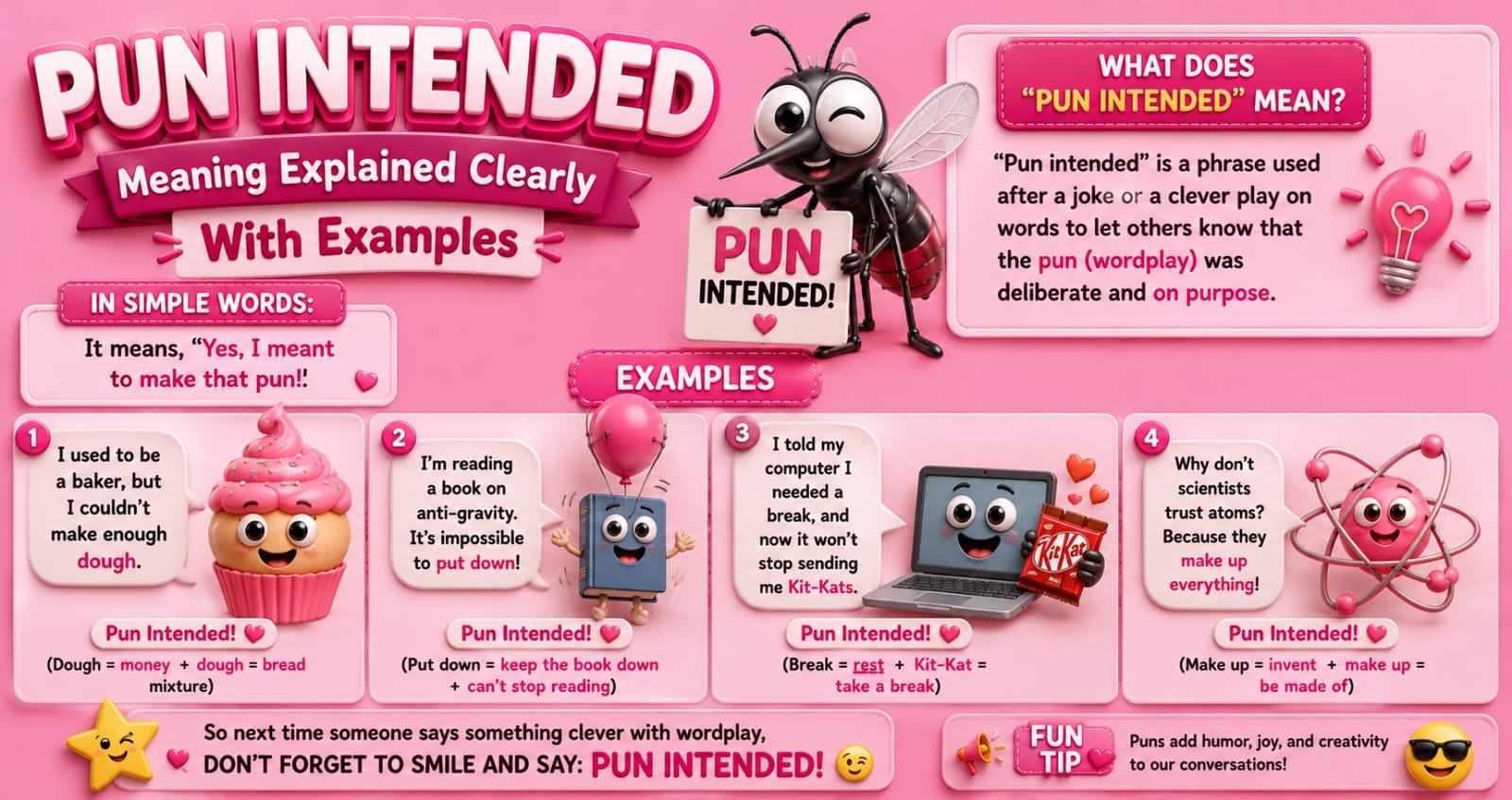
Understanding the pun intended meaning can make clever conversations much easier to follow. You’ve probably seen someone make a witty statement and add “pun intended” afterward. That tiny phrase tells you the wordplay wasn’t accidental.
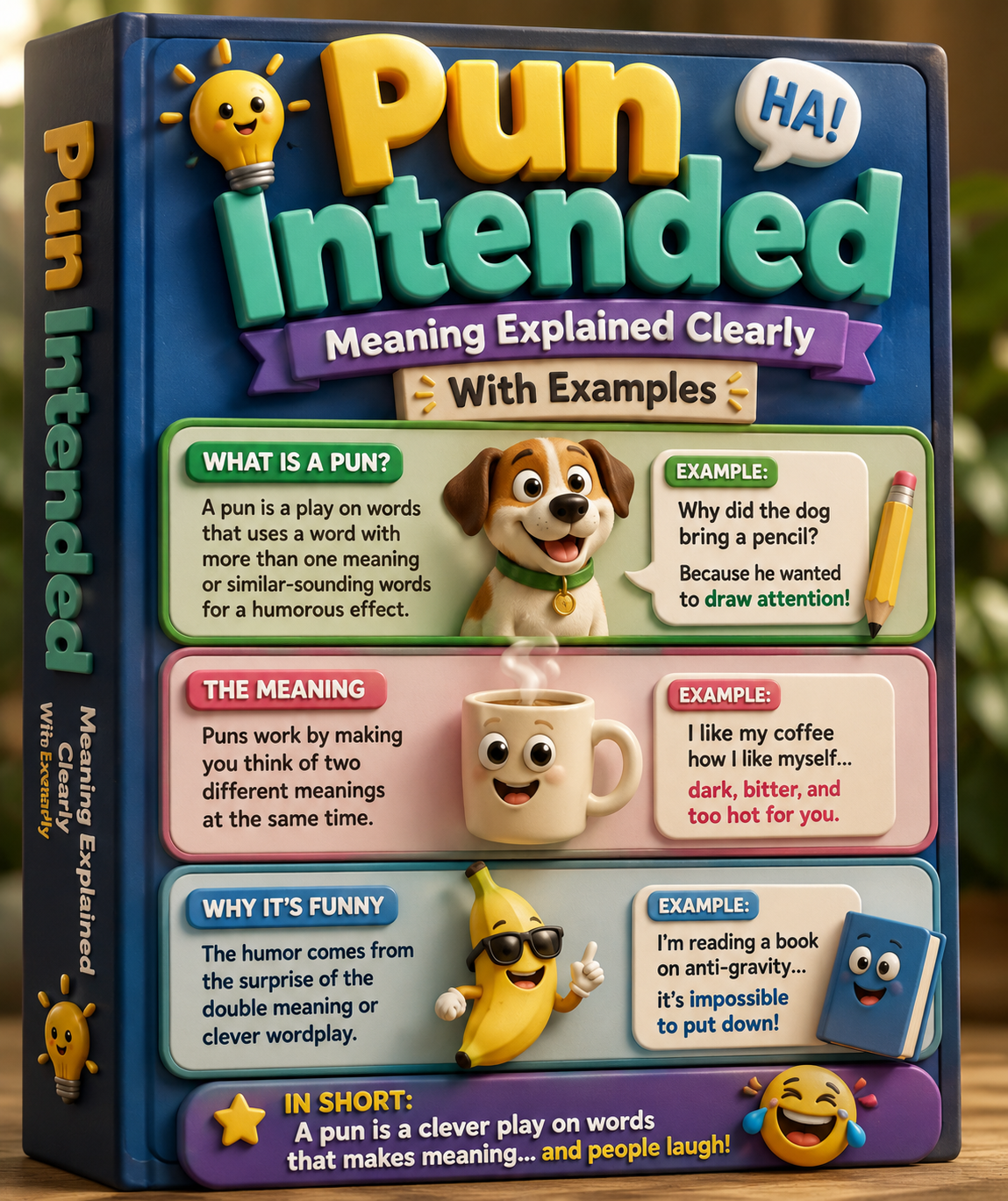
In simple terms, pun intended means the speaker deliberately created a pun and wants you to notice it. It can highlight a clever double meaning, add a playful twist, or make an ordinary sentence more amusing.
Whether you’re learning English, writing funny captions, creating jokes, or simply trying to understand internet humor, knowing this phrase helps. This guide explains what pun intended means, how people use it, how it differs from no pun intended, and when the expression fits naturally.
Let’s begin with the basic definition.
What Does Pun Intended Mean?
The pun intended meaning describes deliberate wordplay that someone knowingly includes in a sentence. After creating the wordplay, the speaker may add “pun intended” to point it out.
In other words, the person isn’t pretending the clever wording happened by accident. They’re giving you a little wink and saying, “Yes, that was on purpose.”
For example:
I’m reading a book about anti-gravity. It’s impossible to put down. Pun intended.
The expression put down creates the joke because it can mean physically placing something somewhere. It can also describe stopping or abandoning something. Adding “pun intended” confirms that the writer deliberately used that double meaning.
Simple Definition
Pun intended means that someone intentionally uses wordplay and wants the audience to recognize it.
The phrase usually appears after a joke, sentence, caption, or statement containing a clever linguistic twist. It can also appear in parentheses as (pun intended).
Explore More Clever Wordplay and Funny Reads
If you enjoy playful language, themed jokes, and quick-fire humor, explore these related reads:
Why It Is Used
People use pun intended for several simple reasons:
- To point out deliberate wordplay
- To make a joke more noticeable
- To emphasize a clever expression
- To signal humorous intent
- To prevent readers from missing the joke
You’ll often encounter the phrase in social media captions, casual messages, comedy, blogs, advertisements, and everyday conversations. It works especially well when the wordplay feels subtle enough that readers might overlook it.
Think of it as a verbal nudge. The joke already exists, but the phrase shines a small spotlight on it.
What Is a Pun? Understanding Wordplay First
Before exploring how to use pun intended, it helps to understand what actually makes something a pun.
A pun is a form of wordplay that uses words with multiple meanings, similar sounds, or related interpretations. Writers and speakers use this technique to create humor, cleverness, surprise, or an unexpected connection between ideas.
For instance:
I used to be a banker, but I lost interest.
The word interest creates the wordplay. It can describe money earned through banking, while it can also mean curiosity or attention.
That simple shift gives the sentence its humorous punch.
Puns have appeared in literature, comedy, advertising, headlines, movies, and ordinary speech for centuries. They can be obvious and silly, or subtle enough to make you pause for a second.
Types of Puns
Understanding different types of puns makes the pun intended meaning much easier to recognize.
1. Homophonic Puns
These use words that sound alike while carrying different meanings.
Example:
I wondered why the baseball kept getting bigger. Then it hit me.
The humor comes from hit, which can describe physical impact while also suggesting sudden understanding.
2. Homographic Puns
These involve words that share spelling but have different meanings or pronunciations.
Example:
The fisherman knew his job well because he caught plenty of current events.
Depending on context, words such as current can connect physical water movement with something happening now.
Read More: Octopus Puns, Storm Puns
3. Compound Puns
These combine multiple pieces of wordplay to create a layered joke. They often appear in longer jokes, clever captions, advertisements, and humorous headlines.
Recognizing these forms helps you understand intentional wordplay examples more quickly. It also explains why some jokes feel clever even before someone adds “pun intended.”
Puns can appear almost anywhere. You’ll find them in novels, comedy routines, brand slogans, movie titles, newspaper headlines, and social media posts. English learners often encounter them while watching shows or reading jokes because one word may carry several meanings at once.
How Pun Intended Is Used in Sentences
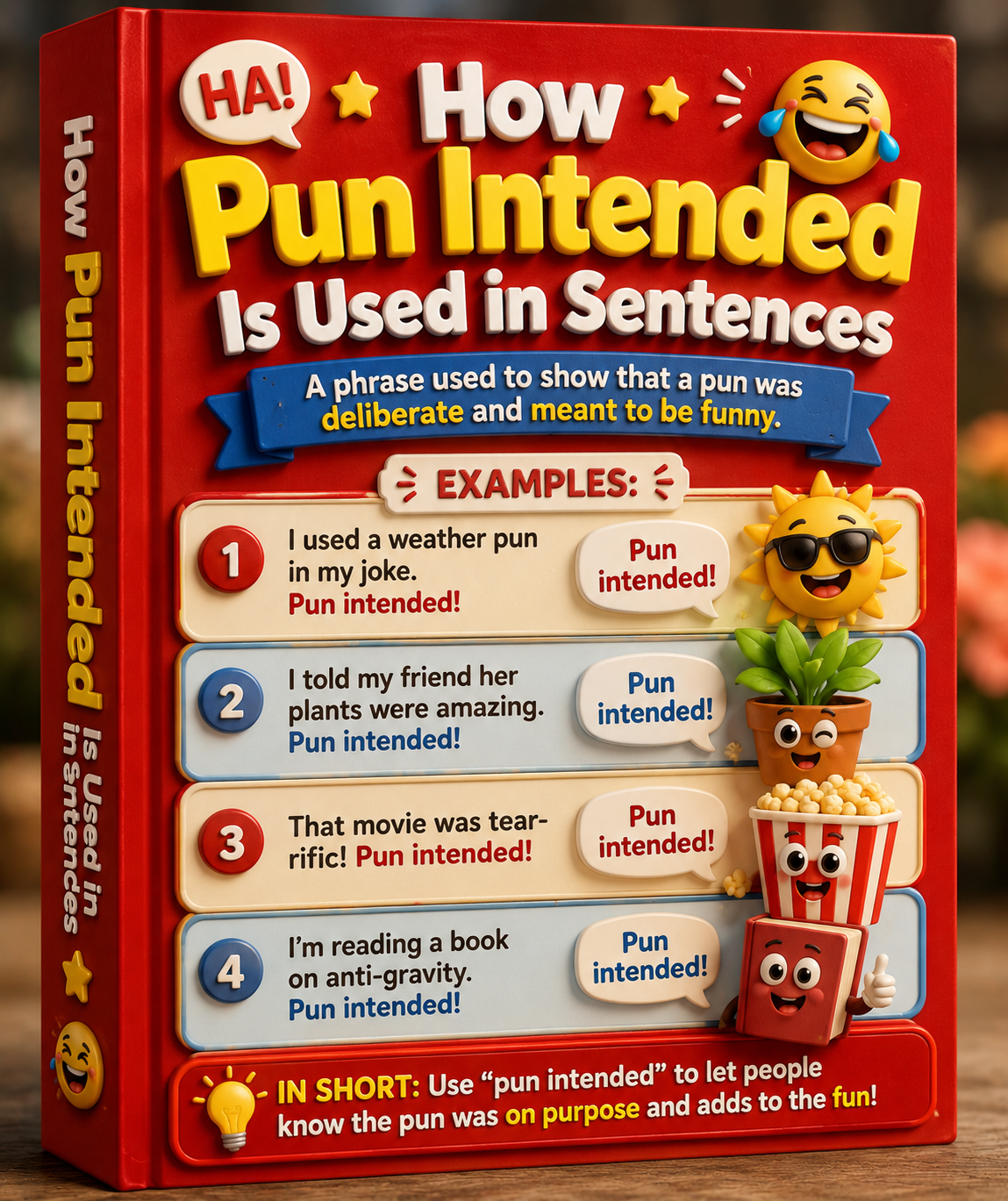
Knowing the pun intended meaning matters, but knowing how to use the phrase naturally matters just as much.
Most speakers place pun intended immediately after a sentence containing deliberate wordplay. The phrase acts like a small signal that tells the audience to notice the linguistic twist.
Placement
You’ll usually find the expression at the end of a sentence or joke. Writers may place it in parentheses, although they can also write it as a separate phrase.
Example:
I wondered why the math book looked sad. It had too many problems. Pun intended.
The word problems creates the humorous connection. In mathematics, problems require solutions. In everyday language, problems can also describe difficult situations.
In Written English
Written communication often lacks the vocal tone that helps listeners recognize humor. Because of that, pun intended can act as a useful cue.
Example:
That was a moving speech. Pun intended.
Here, moving can describe something emotionally powerful. It can also refer to physical movement. The added phrase makes the deliberate double meaning unmistakable.
You might see this style in blog posts, social captions, humorous articles, emails between friends, and online comments.
In Spoken English
People don’t always need to say pun intended aloud. Facial expressions, timing, emphasis, and tone can reveal the joke naturally.
Still, speakers sometimes add the phrase for comic effect. Saying it after an obvious pun can make the joke feel intentionally cheeky.
Ten Practical Examples
Here are several pun intended examples that show how wordplay works naturally in everyday English:
- I stayed awake until sunrise. Then it dawned on me. Pun intended.
- The calendar looked worried because its days were numbered. Pun intended.
- The bakery kept succeeding because business was always on a roll. Pun intended.
- I became friends with an electrician. We have great connections. Pun intended.
- The dentist stayed calm because he knew how to handle the pressure. Pun intended.
- I wanted to learn about parallel lines. It seemed pointless because they never meet. Pun intended.
- The baker quit his job because he couldn’t make enough dough. Pun intended.
- The musician couldn’t find the right note, but he kept tuning in. Pun intended.
- The fisherman opened a successful business because he understood the net profit. Pun intended.
- I tried reading about elevators, but the subject kept bringing me down. Pun intended.
Each example uses a word or phrase with more than one possible interpretation. The humor comes from shifting between those meanings.
That’s the heart of a pun: one expression, two possible readings, and one unexpected punchline.
Pun Intended vs No Pun Intended: What Is the Difference?
The difference between pun intended and no pun intended comes down to one thing: intention.
Both expressions acknowledge wordplay, but they send opposite signals. Pun intended tells readers that the clever wording was deliberate. No pun intended tells them that the double meaning happened accidentally.
Once you understand that distinction, these phrases become much easier to use naturally.
Pun Intended
Use pun intended when you knowingly create wordplay and want your audience to catch it.
For example:
The fisherman made a fortune from his net gains. Pun intended.
The phrase net gains works in two ways. It can describe financial profit while also connecting to a fishing net. The writer deliberately created that connection.
No Pun Intended
Use no pun intended when your wording accidentally creates a possible joke or double meaning.
For example:
We need to address this issue. No pun intended.
The word address can relate to dealing with a problem. It can also refer to a physical location or a speech given to an audience. If the speaker didn’t intentionally create that connection, no pun intended makes the meaning clear.
Quick Comparison
| Phrase | Meaning | Main Purpose |
|---|---|---|
| Pun intended | The wordplay was deliberate | Highlights intentional humor |
| No pun intended | The wordplay was accidental | Clarifies unintended humor |
The distinction may seem tiny, but it changes the entire tone of the sentence.
Pun intended embraces the joke. No pun intended distances the speaker from it.
Understanding this contrast also helps you avoid awkward usage when writing captions, jokes, blog posts, or everyday messages.
What Does Pun Intended, Perhaps Mean?
You may occasionally encounter the unusual phrase “pun intended, perhaps.” It adds uncertainty to the speaker’s intention.
Instead of firmly saying the wordplay was deliberate, the phrase leaves room for interpretation. It can sound playful, ironic, teasing, or deliberately ambiguous.
For example:
That was a striking performance. Pun intended, perhaps.
The word striking can describe something impressive. It can also connect with hitting or physical impact. Adding perhaps makes the speaker’s intention deliberately unclear.
Read More: RD Meaning in Text, Viking Puns
Why Use “Perhaps”?
The word perhaps creates a softer form of wordplay acknowledgment. It suggests that the speaker might have intended the joke, but they aren’t completely committing to that claim.
This style can work especially well in humorous writing. It gives the sentence an extra layer of wit without explaining the joke too heavily.
However, don’t force the phrase into every pun. Sometimes a straightforward pun intended sounds cleaner and more natural.
Why Do People Say Pun Intended?
People say pun intended because wordplay doesn’t always register immediately.
A clever sentence can contain two meanings without making the connection obvious. Adding the phrase gives readers a subtle signal that something humorous happened.
1. Social Signaling of Humor
The expression shows that the speaker recognizes the cleverness of their own wording.
Instead of leaving the audience wondering whether the joke happened accidentally, the phrase confirms the intention. It works almost like a wink at the end of a sentence.
2. Avoiding Confusion
Some puns rely on subtle meanings. Without context, readers may interpret the sentence literally and miss the joke completely.
Adding pun intended removes that uncertainty.
For example:
The new bakery is really taking off. Pun intended.
The phrase taking off can suggest rapid success. It can also describe something leaving the ground. The added expression helps readers notice that second interpretation.
3. Enhancing Wit
A well-timed acknowledgment can strengthen a joke. It tells the audience that the unusual wording wasn’t random.
However, timing matters. If the pun already feels obvious, explaining it afterward can sometimes make the joke less effective.
The best wordplay often gives readers a moment to discover the second meaning themselves.
4. Building Rapport
Humor creates connection. A playful pun can make a conversation feel lighter and more relaxed.
That’s why people often use intentional wordplay in friendly messages, social media captions, casual workplace conversations, and entertaining blog content.
A tiny linguistic twist can turn an ordinary sentence into something memorable.
Can a Pun Be Unintentional?
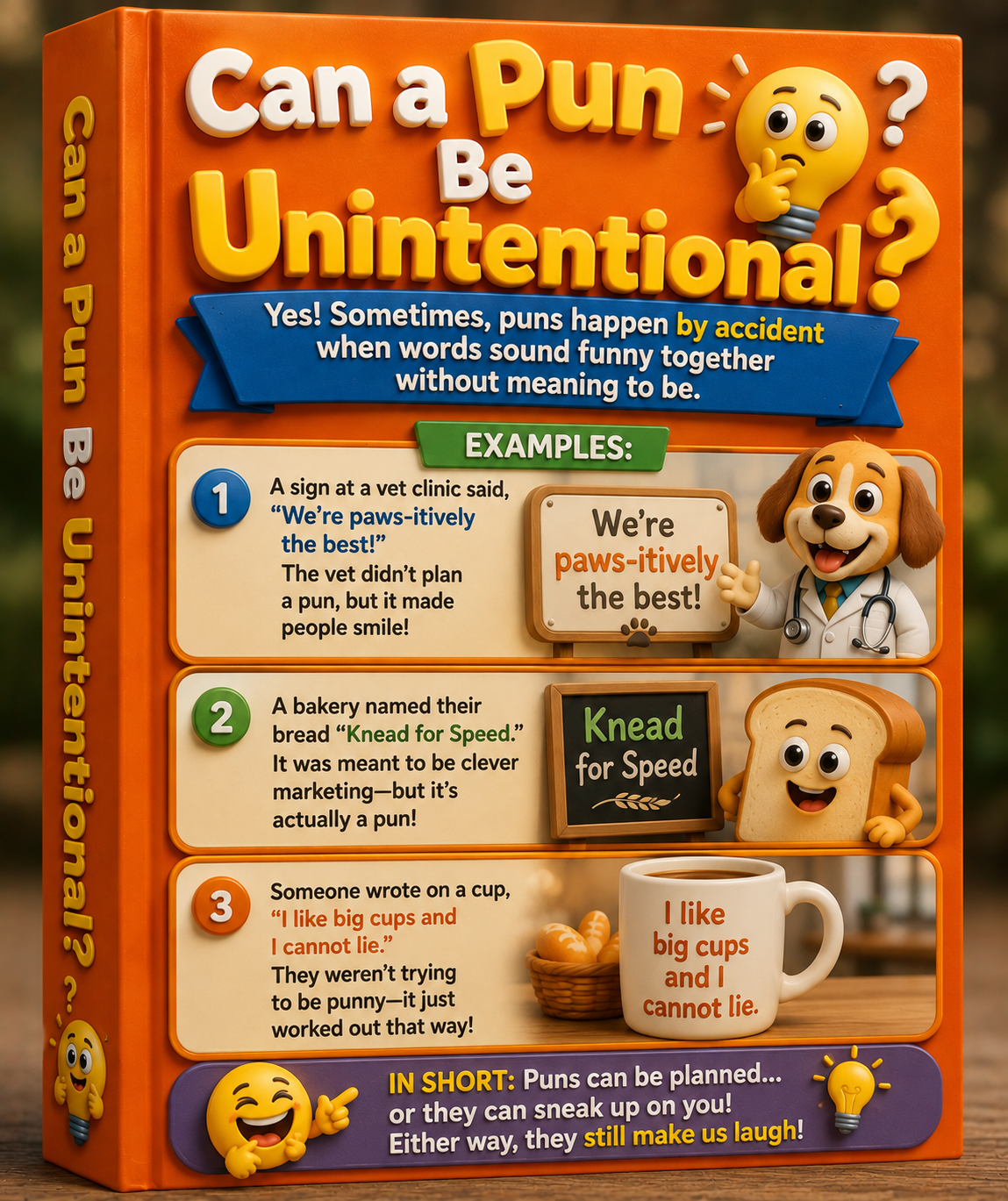
Absolutely. A pun can happen without deliberate planning.
Language contains thousands of words with multiple meanings. Because of that, speakers sometimes create accidental wordplay without realizing it.
For example:
We need to cut the budget.
The word cut can simply mean reducing expenses. Depending on the surrounding conversation, however, someone might interpret it through another meaning.
In such situations, the speaker might add:
No pun intended.
That clarification tells the audience that the alternate meaning wasn’t part of the original joke.
Intent Matters
The difference between an intentional and accidental pun depends on the speaker’s purpose.
If someone deliberately chooses a word because it carries two meanings, pun intended fits.
If the second meaning appears unexpectedly, no pun intended makes more sense.
This distinction matters when you’re writing humor because intention shapes how readers interpret the joke. A deliberate pun feels playful. An accidental one can create an amusing coincidence.
Is Saying Pun Intended Rude or Clever?
Generally, pun intended sounds playful, witty, and lighthearted. It isn’t inherently rude or offensive.
Still, context matters.
A phrase that works beautifully in a funny caption may sound inappropriate in a serious announcement. The audience, subject, and setting should guide your choice.
Appropriate Contexts
You can comfortably use pun intended in situations such as:
- Casual conversations
- Social media captions
- Humorous blog posts
- Friendly text messages
- Comedy writing
- Informal workplace communication
- Party games and trivia
For example, a bakery might post:
We’re rolling out some fresh ideas. Pun intended.
That wording feels natural because the subject already invites playful language.
Situations to Avoid
The phrase may feel out of place in:
- Academic research papers
- Legal documents
- Serious business reports
- Sensitive announcements
- Formal professional correspondence
- Emergency communication
In those settings, clarity usually matters more than wordplay.
Formal writing doesn’t leave much room for a linguistic wink. Save pun intended for moments where humor supports the message rather than distracting from it.
Pun Intended in Literature and Media
Puns have a long history in literature and popular culture. Writers use them to create humor, reveal character, emphasize themes, and give ordinary phrases additional meaning.
Shakespeare famously used wordplay throughout his plays. Modern novelists, comedians, screenwriters, advertisers, and journalists continue that tradition in different ways.
Puns in Literature
Literary puns can do more than make readers laugh. A carefully chosen word can carry several meanings at once, allowing a sentence to work on multiple levels.
This technique adds texture to dialogue and narration. It can also reveal a character’s personality or attitude.
Puns in Advertising
Brands frequently use wordplay because memorable language catches attention.
A short pun can make a slogan easier to remember. Food companies, clothing brands, travel businesses, and entertainment platforms often experiment with playful wording.
The expression pun intended doesn’t always appear explicitly. Sometimes the clever wording itself makes the intention obvious.
Puns in Modern Media
Today, you’ll find puns across social media, headlines, memes, television, podcasts, and online communities.
Digital communication especially favors short jokes. A clever caption can communicate an entire idea in just a few words.
Recognizing these literary device pun examples and modern wordplay techniques can sharpen your understanding of English humor.
Common Mistakes When Using Pun Intended
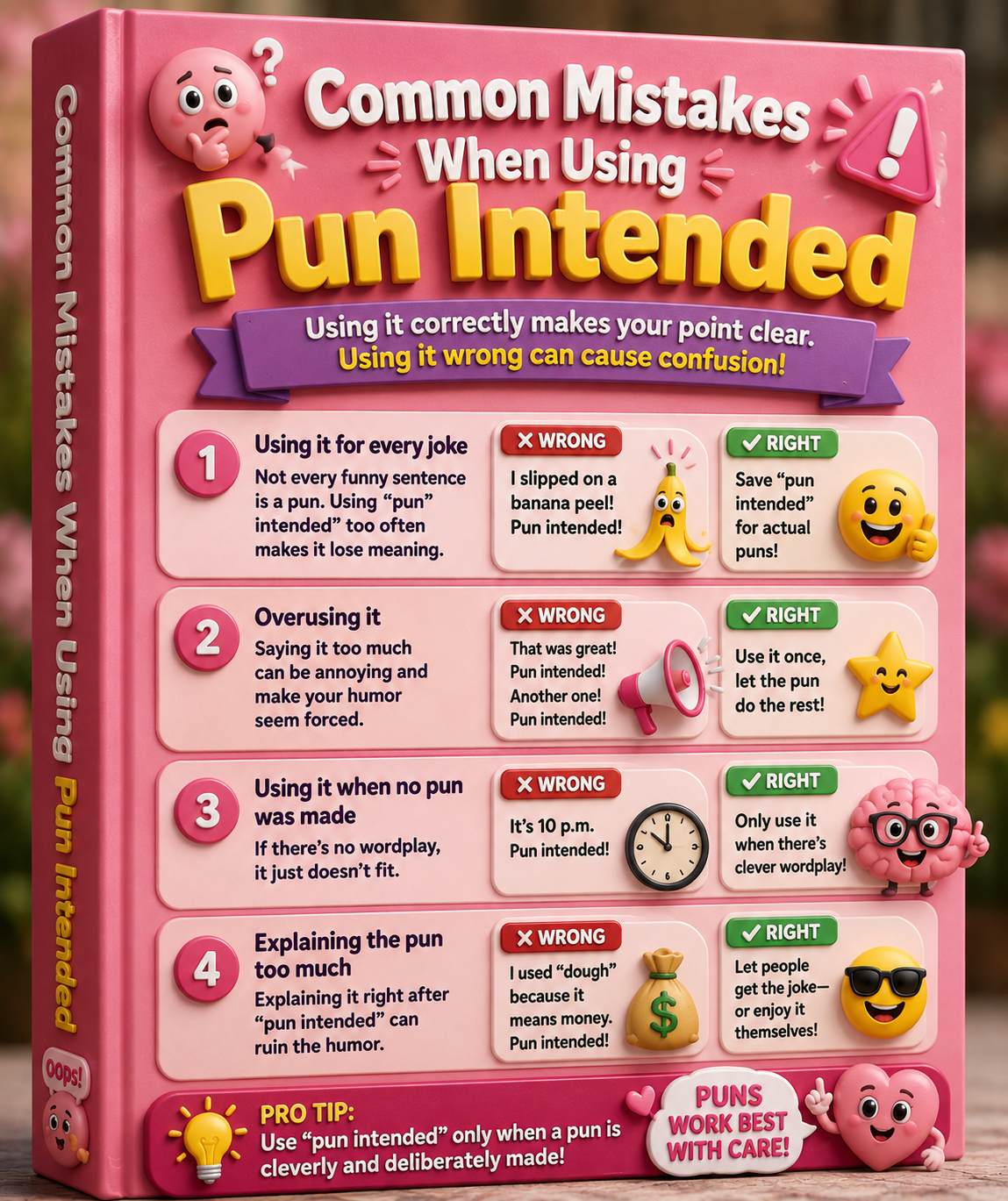
Although pun intended looks simple, writers sometimes use it incorrectly.
A good pun should feel connected to the sentence. If the wordplay feels forced, adding the phrase won’t rescue the joke.
Overusing It
Using pun intended after every clever sentence quickly becomes predictable.
If every paragraph contains the phrase, readers may stop noticing it. Let some wordplay stand on its own.
Using It Without a Real Pun
Sometimes writers add the expression even though no meaningful double meaning exists.
That weakens the humor instead of strengthening it.
Before using the phrase, ask yourself whether the sentence genuinely contains wordplay. If there isn’t another interpretation, you probably don’t need the expression.
Using It in Serious Writing
Formal documents usually require direct and precise communication.
Adding pun intended to a legal contract or academic report can make the writing seem less professional. Humor has its place, but serious contexts demand restraint.
Misunderstanding Double Entendre
A double entendre involves a phrase with two interpretations. One meaning may sometimes carry a suggestive or humorous implication.
However, not every double meaning automatically qualifies as a pun.
Puns generally depend on linguistic similarity, multiple meanings, or sound-based wordplay. Double entendres can overlap with puns, but the terms aren’t always interchangeable.
Understanding that distinction helps you recognize different forms of English wordplay, humor, and rhetorical technique.
With the basics covered, you’re now ready to use pun intended more naturally. The final section will bring everything together with practical guidance, examples, and frequently asked questions.
Final Thoughts: Make Every Wordplay Moment More Memorable
Understanding the pun intended meaning gives you a better feel for one of English’s most playful forms of humor. Once you recognize how double meanings work, clever sentences become much easier to understand.
The key is simple: use “pun intended” when you deliberately create wordplay. If the humorous interpretation happened by accident, “no pun intended” usually fits better.
Good puns don’t need complicated explanations. They rely on timing, context, and a clever choice of words.
For example:
The baker had a lot on his plate. Pun intended.
The sentence works because plate can describe both a literal dish and a person’s workload or responsibilities. The added phrase simply confirms that the connection was intentional.
Whether you’re writing funny captions, creating jokes, learning English, or adding personality to casual conversations, puns can make ordinary language more entertaining.
How to Use Pun Intended Naturally
Keep these simple guidelines in mind:
- Use it after deliberate wordplay.
- Place it near the end of the sentence.
- Let the joke remain easy to understand.
- Avoid explaining every obvious pun.
- Match the humor to your audience.
- Don’t use it repeatedly in the same passage.
- Choose wordplay that fits the topic.
A strong pun should feel like a little surprise. You want readers to notice the second meaning and enjoy the moment.
Frequently Asked Questions About Pun Intended Meaning
Q1. What does pun intended mean in English?
Pun intended means the speaker deliberately used wordplay and wants the audience to recognize it.
The expression often appears after a sentence containing a double meaning. It can also appear in parentheses as (pun intended).
For example:
The bakery is doing well because business is on a roll. Pun intended.
The word roll connects baking with business success. The phrase confirms that the connection was intentional.
Q2. How do you use pun intended in a sentence?
Place pun intended after a sentence containing deliberate wordplay.
For example:
The bakery business is on a roll. Pun intended.
You can also use the phrase inside parentheses:
The new café is really brewing up something special (pun intended).
The expression works best when the preceding sentence contains a genuine linguistic twist.
Q3. Is pun intended grammatically correct?
Yes. Pun intended works as a short standalone expression that clarifies the speaker’s intention.
It doesn’t need to form a complete grammatical sentence. Instead, it acts as a conversational comment attached to the previous statement.
You’ll commonly see it written as:
- Pun intended.
- (Pun intended.)
- Pun intended!
The punctuation can change according to the tone and surrounding sentence.
Q4. What is the opposite of pun intended?
The commonly used opposite expression is no pun intended.
Use pun intended when the wordplay was deliberate.
Use no pun intended when a possible double meaning appeared accidentally.
For example:
We need to address the problem. No pun intended.
Here, the speaker indicates that any alternate interpretation wasn’t intentional.
Q5. Can pun intended be sarcastic?
Yes. The expression can sound playful, ironic, teasing, or mildly sarcastic depending on the situation.
For example:
That meeting was painfully productive. Pun intended.
The phrase can emphasize an intentionally unusual choice of words. In another context, someone might use it jokingly after an especially obvious pun.
Tone makes a major difference. The same words can sound clever in one conversation and overly obvious in another.
Pun Intended Meaning in Everyday Communication
You don’t need to write comedy professionally to enjoy puns. Everyday conversations are full of opportunities for playful language.
A friend might say:
I’m trying to stay positive. It’s my current situation. Pun intended.
A social media creator might write:
This coffee is grounds for celebration. Pun intended.
A teacher could even use simple wordplay to make a lesson more memorable.
The trick involves knowing your audience. A clever pun can brighten a casual exchange, while the same joke might distract from a serious message.
Pun Intended vs. No Pun Intended: A Simple Rule
If you’re unsure which expression to choose, remember one straightforward rule:
Did you mean to create the wordplay?
If the answer is yes, use:
Pun intended.
If the answer is no, use:
No pun intended.
That’s really the heart of the distinction.
You don’t need to overthink every double meaning. Just consider the speaker’s intention and the context surrounding the sentence.
Why Puns Remain Popular
Puns survive because they make familiar language feel fresh.
A single word can suddenly take on another meaning. That shift creates surprise, and surprise often creates humor.
They’re also incredibly flexible. You can build puns around food, animals, sports, careers, holidays, relationships, technology, school, travel, and almost any everyday subject.
That’s why you’ll find funny puns, clever captions, pun-based headlines, and wordplay jokes across the internet.
Even a short sentence can become memorable when the wording has an unexpected twist.
How to Create Your Own Pun
Creating a good pun becomes easier when you look for words with multiple meanings.
Start with an ordinary topic. Then brainstorm words connected with that subject.
For example, suppose you’re writing about coffee.
Potential wordplay might involve:
- Brew
- Grounds
- Roast
- Bean
- Perk
- Mug
- Steam
- Grind
Now connect one of those words with another meaning.
I like my coffee with a little mug-nificent attitude. Pun intended.
The result doesn’t have to be perfect on the first attempt. Play with different meanings until the wording feels natural.
The second version can feel sharper because readers immediately recognize the double meaning.
Use the phrase when it adds value. Don’t treat it as mandatory punctuation for every pun.